June 12, 2026
How Humidity Affects Your Hair (And What Actually Helps)
Hair Care · Hair Health

You walk out the door in Palm Harbor with hair that looked sharp in the mirror, and by the time you’ve crossed the parking lot the shape is gone. The ends puff. The crown lifts. A piece you smoothed five minutes ago is curling toward your jaw with a mind of its own. That’s not your imagination, and it isn’t a styling failure. That’s humidity rewriting your hair while you walk.
Living on the Gulf side of Florida means you’re styling against the air. Understanding what humidity is actually doing — at the strand, not the surface — is the difference between fighting your hair every morning and working with it.
Key Takeaways
- Humidity breaks the weak hydrogen bonds that hold your style, so the air re-sets your hair into frizz the moment you step outside.
- Color-treated, lightened, and damaged hair frizz worst — a lifted cuticle is the doorway humidity walks through.
- The cut comes first: a shape built for Palm Harbor air still reads as intentional when the dew point climbs.
- Sealing the cuticle is the real fix — a keratin smoothing or glossing service blocks moisture at the strand for weeks to months.
- Layer your products and let hair air-dry undisturbed; one “miracle” bottle will not out-muscle a Florida summer.
What humidity is actually doing to your hair
Hair is mostly a protein called keratin, and keratin is held together by two kinds of bonds — strong permanent ones, and weaker hydrogen bonds that break and re-form every time your hair gets wet, dries, or meets the air. The weaker bonds are the ones that hold your style.
When the air is dry, those bonds set the way you styled them. When the air is heavy with moisture — the kind of Palm Harbor afternoon where the asphalt looks wet without rain — water molecules slip into the strand and break those bonds open. The hair swells. The cuticle, the outer scale layer, lifts. The shape you set this morning unravels, and your hair re-bonds itself into whatever pattern it would prefer if you hadn’t intervened.
That’s frizz. That’s the puff. That’s why a blowout that lasted three days in January falls apart in twenty minutes in July.
The wave or curl you were born with is the shape your hair wants to be. Humidity is your hair remembering.
Who gets hit the hardest
Not everyone gets the same humidity hit, and knowing where you sit on the spectrum changes what you do about it.
Fine, straight hair tends to go limp and lose volume first — the weight of absorbed moisture pulls the lift right out of the roots. Coarse, wavy, or curly hair tends to swell and frizz, with individual strands lifting away from the rest of the pattern. Color-treated and lightened hair is the most vulnerable on the block. The lifting process opens the cuticle, and an opened cuticle is a doorway humidity walks right through. If you’ve ever noticed your color looks great in October and starts to feel rough and unpredictable by August, that’s not the color failing — that’s the cuticle taking on water.
Damaged hair behaves the same way. Heat damage, breakage from over-processing, mechanical wear from rough brushing — all of it widens the door humidity uses to get in.
What actually helps
This is where most articles list ten products and call it a day. The honest answer is layered, and it starts long before you reach for a serum.
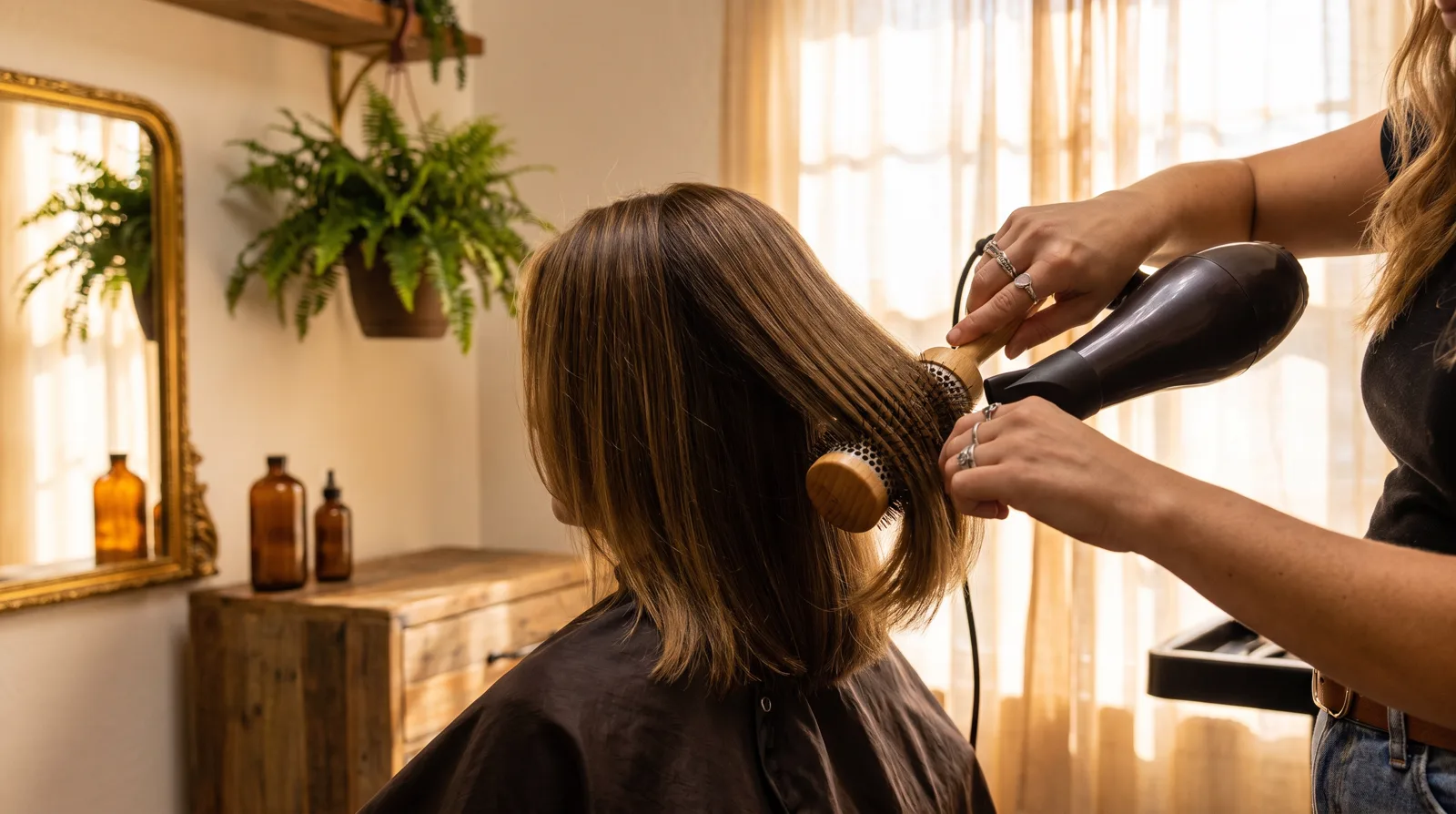
Start with the cut. A great cut accounts for what your hair does when the weather works against you. A shape built for a low-humidity climate falls apart in Palm Harbor air; a shape built for this climate keeps reading as intentional even when the air is heavy. Manny takes the time to understand how your hair behaves in real life — how it sits on a Tuesday morning on the way to the school drop-off, not how it looks the second the blow-dryer turns off. That conversation is the foundation. Everything else is supporting work.
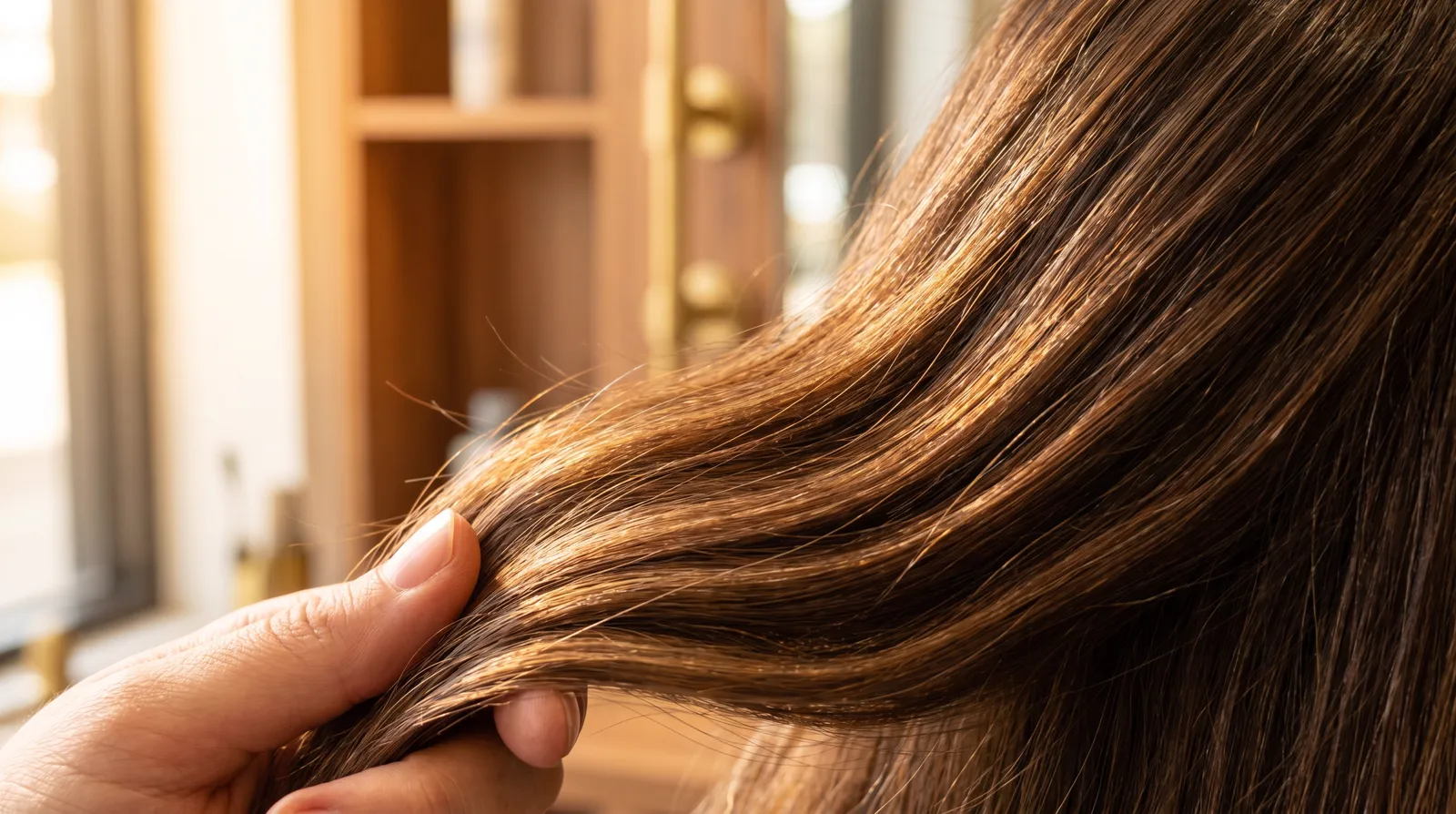
Respect the cuticle. The smoother and more sealed your cuticle is, the less humidity gets in. That’s the whole game. A keratin smoothing service does this at the strand level — actively reinforcing the hair and laying the cuticle flat for months. For the right person, it can take a daily fight and make it disappear. A glossing service does a lighter version of the same thing, sealing in shine and resilience for weeks at a time. These are not commodity services. They’re individualized work, and they’re built around your hair, your color history, and how much movement you want to keep.
Get the products right. Anti-humidity isn’t a marketing word; it points to formulas that coat the strand with film-forming polymers that physically block moisture from getting in. A lightweight smoothing cream on damp hair, a finishing serum on dry hair, and a flexible-hold spray that doesn’t lock you into one shape — that’s a layered system. One miracle bottle isn’t going to do it.
Air-dry strategy matters more than people think. If you let your hair dry in the air without any product or shape direction, humidity gets to write the ending. Apply your product, set the shape you want with your hands, and let it dry undisturbed. Touching damp hair is how frizz gets locked in.
Color choices interact with climate. Dimensional color tends to grow out gracefully in a humid climate because the line of regrowth is softer. A single-process global color asks more of your routine to keep clean and polished. Neither one is wrong — it’s a question of how much daily work you want to sign up for, and that’s a real conversation to have in the chair.
The Palm Harbor reality
Most of the year, you’re styling for an environment most styling books were not written for. The right cut, the right color strategy, a smoothing or glossing service when it makes sense, and a product system that supports the shape your hair is in — together, that’s how you stop fighting the air and start working with it.
There’s no version of this where humidity disappears. There is a version where your hair stops surprising you.
That’s the goal. That’s the conversation. And that’s why every appointment at Vibe Salon starts with how your hair actually lives — not how it looked the day you decided it was time for something different.
Frequently asked questions
Why does my hair frizz more in Palm Harbor than where I used to live?
Frizz tracks dew point — the amount of moisture hanging in the air — not temperature. Tampa Bay sits above the ~65°F dew-point “frizz line” for roughly half the year, so there is far more water ready to slip into the strand and break the bonds holding your style than in a drier climate.
Does anti-humidity product actually work, or is it just marketing?
It works, within limits. Anti-humidity formulas use film-forming polymers that coat the strand and slow moisture from getting in. The catch is they are one layer of a system — a smoothing cream on damp hair, a serum on dry hair, and a flexible-hold finish — not a single miracle bottle.
What actually humidity-proofs my hair long term?
Sealing the cuticle at the strand. A keratin smoothing treatment lays the cuticle flat and blocks water intrusion for months; a glossing service does a lighter version for weeks. Pair either with the right cut and a color strategy built for the climate — that is the conversation to have when you book a service at Vibe.
Ready to stop fighting the air? Book online and come find your vibe.